Play
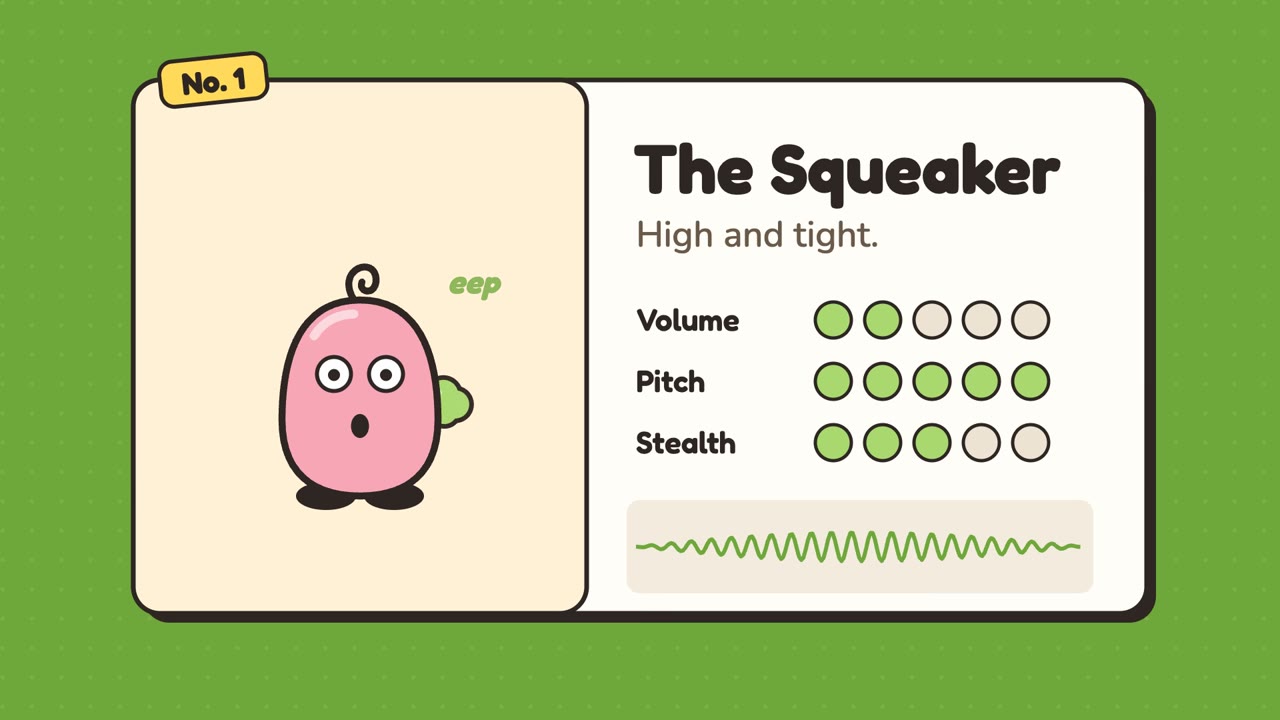
Why Farts Are Funny
A 75-second animated explainer: what a fart is made of, a field guide to five types of toots, and why we laugh at them. Every scene is drawn in code.
Watch the video →What I'm building right now, ideas I want to share, and creative AI use-cases I'm thinking through.
A 75-second animated explainer: what a fart is made of, a field guide to five types of toots, and why we laugh at them. Every scene is drawn in code.
Watch the video →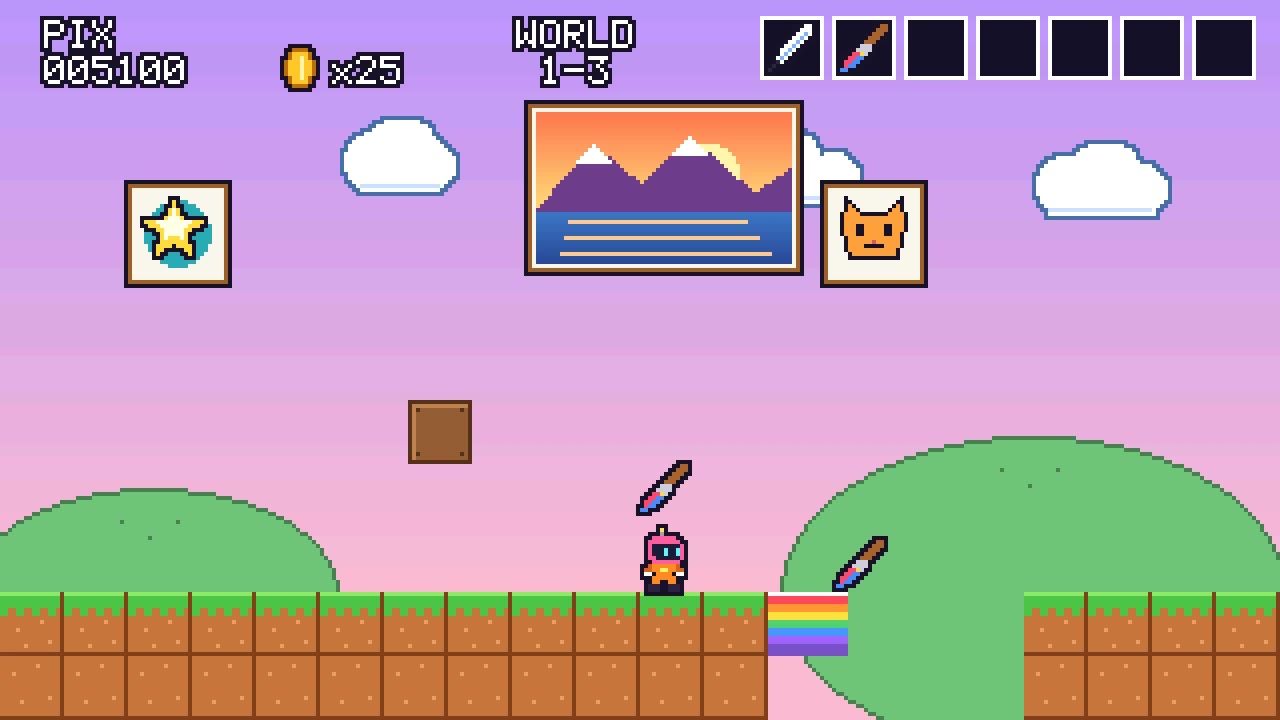
A two-minute pixel platformer about what generative AI can do. Pix grabs one power-up per level, from writing and images to code, video and agents, then dodges a hallucination.
Watch the video →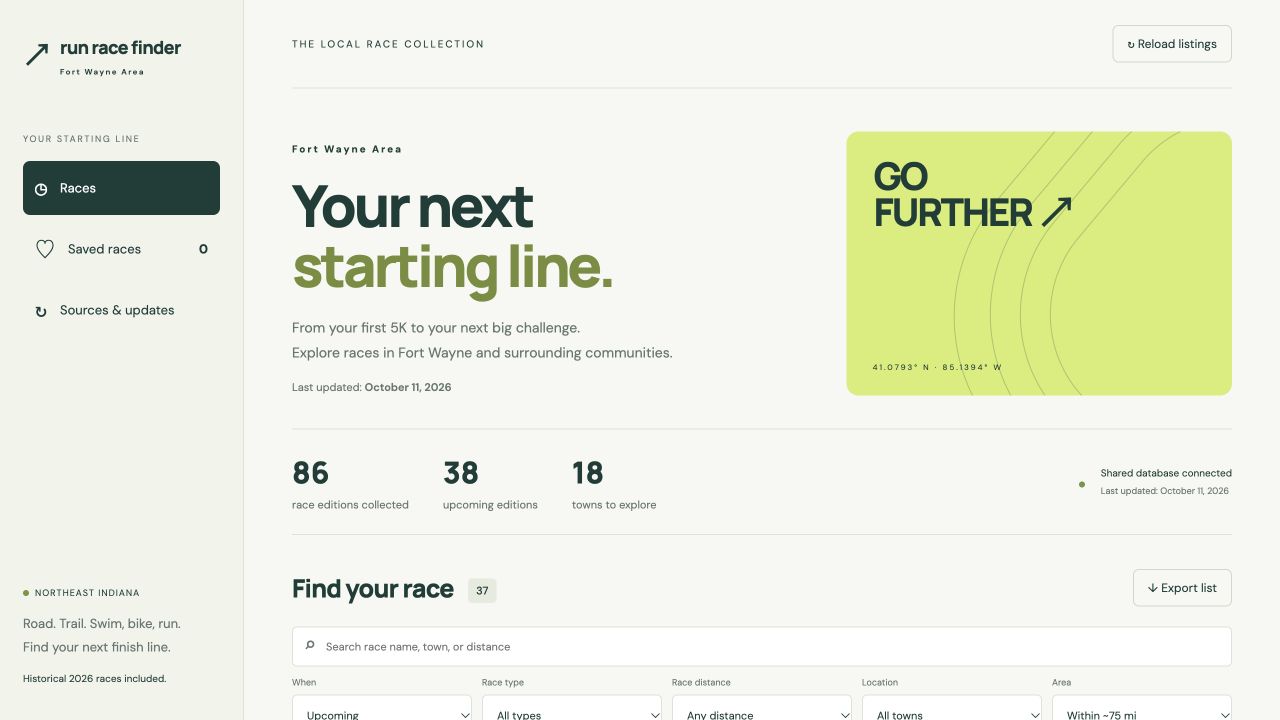
Find your next starting line in the Fort Wayne Area. Browse 5Ks, 10Ks, marathons, trail races and triathlons in Fort Wayne and surrounding communities, including past 2026 editions.
Find a race →
A two-minute pixel platformer about what generative AI can do. Pix grabs one power-up per level, from writing and images to code, video and agents, then dodges a hallucination.
Claude Code drew every frame in code on a 320×180 screen, the size of an old game console, and scaled it up so the pixels stay sharp. The hero, tiles, chiptune music and sound effects are all original and made in code. The narrator is an ElevenLabs voice pitched up into a cartoon character. A level select under the video jumps to each power-up, and captions are in the player.
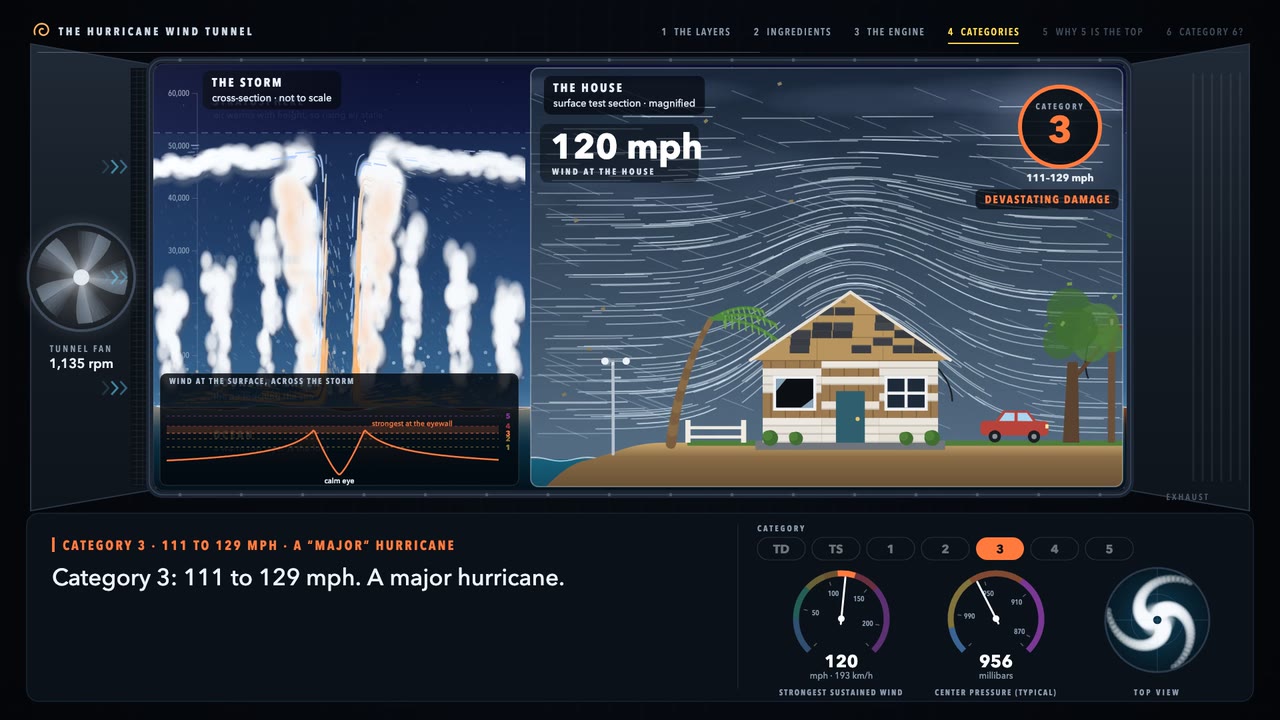
A narrated explainer, just under 6 minutes: how a hurricane forms inside a wind tunnel, what each category does to a house, why the scale stops at 5, and whether there could be a Category 6. Every scene is drawn in code.
Claude Code drew each scene as a web page and turned it into video with ffmpeg. Each animation is timed to the sentence that describes it. The narrator is a stock ElevenLabs voice, and the wind, rain and impact sounds are made in code. The facts come from the National Hurricane Center and a 2024 study in PNAS. Captions are in the player.
A 75-second animated explainer: what a fart is made of, a field guide to five types of toots, and why we laugh at them. Every scene is drawn in code.
Claude Code wrote the script, with a source for every fact, drew each scene as a web page and turned it into video with ffmpeg. Each animation is timed to a word in the narration. The narrator, toot sounds and music were made with ElevenLabs. Captions are in the player.
Find your next starting line in the Fort Wayne Area. Browse 5Ks, 10Ks, marathons, trail races and triathlons in Fort Wayne and surrounding communities, including past 2026 editions.
Filter by town, distance, race type and date, then sort your results. Save favorites on your device, export a list or add a race to your calendar. Scheduled organizer checks refresh the listings, with a last updated date and source links so you can confirm details before registering.
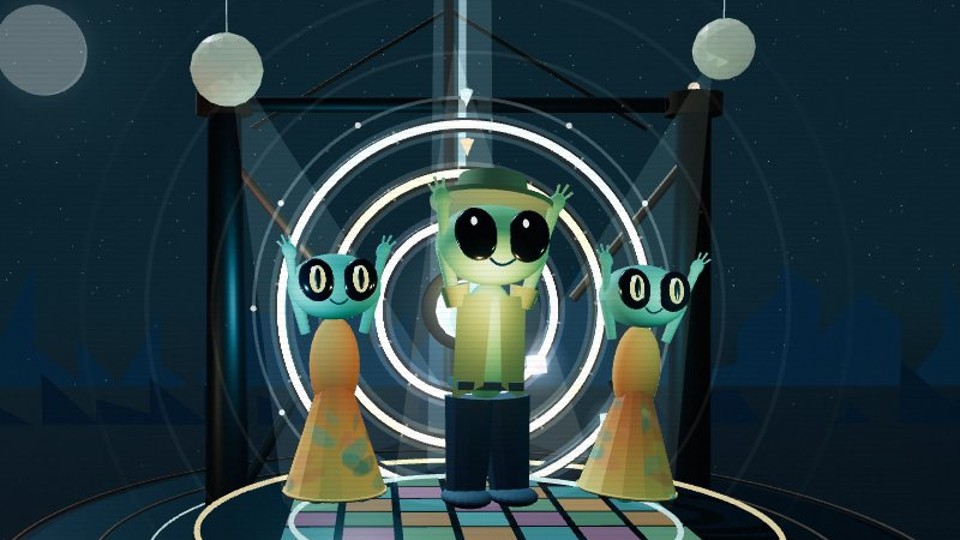
Tune three antenna rings to recover a signal from Elsewhere Planet. When they align, the observatory becomes an alien dance floor. Three.js draws the scene, Tone.js makes the tuning sounds, and the aliens have a different dance for each of three songs.
Drag each glowing diamond to the triangle at the top of its ring. Every alignment brings back another musical layer. When all three lock, choose “Elsewhere Party,” “Silence into Home,” or “Little Green Pickers.” Switch while the aliens dance or replay a song after it ends. Each song's moves follow its beats and musical accents, measured ahead of time from the recording. You can also tune with the keyboard and mute the sound.
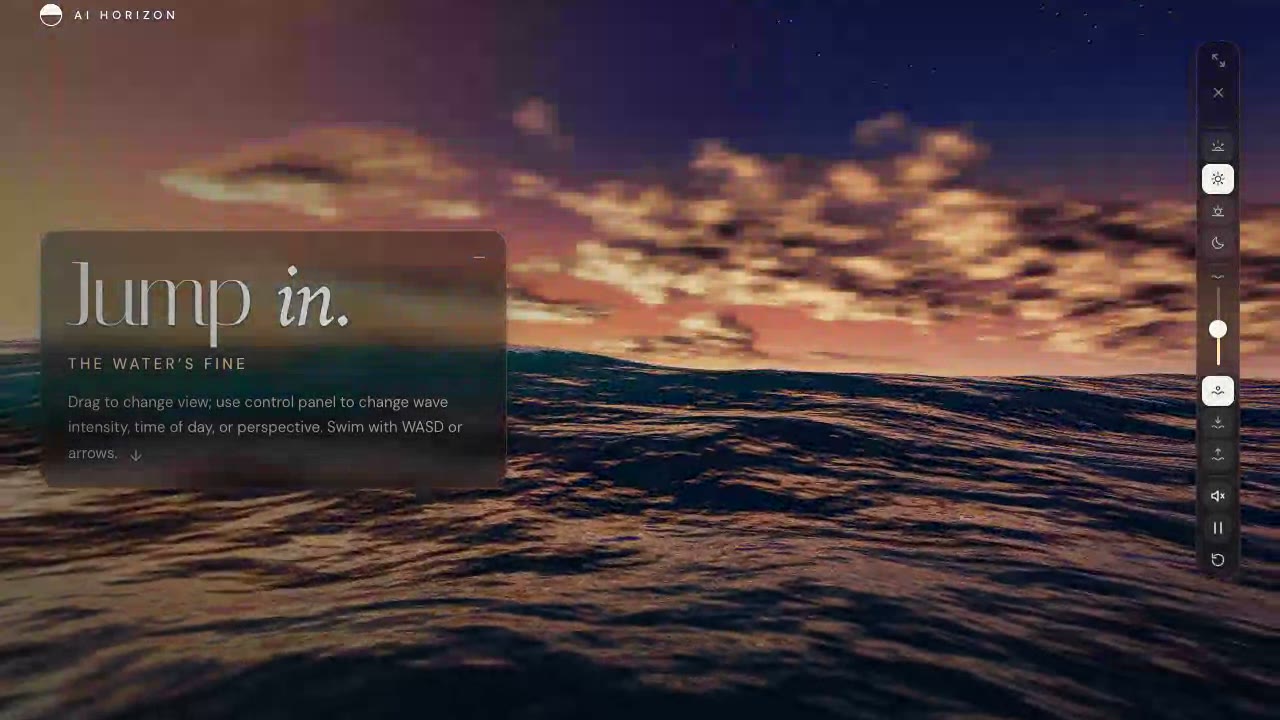
I built this with Claude Code, starting from MengTo’s open-source ultra-realistic water for Three.js, and merged in the best parts of a second version Codex built. The ocean is not a video. Eight wave formulas are drawn live by the graphics card in the browser, and the sky, the whitecaps, the underwater view and the sound are all made in code. The three photographs below the water were generated on my Mac with ComfyUI, and the opening line is C.S. Lewis.
Drag to look around. Use the panel to change the sea from glass to monstrous, the time of day and your height, or scroll down to go under. Swim with W A S D or the arrow keys, or hold the swim button on a phone. Below the water are three short sections on exploration, curiosity and courage.
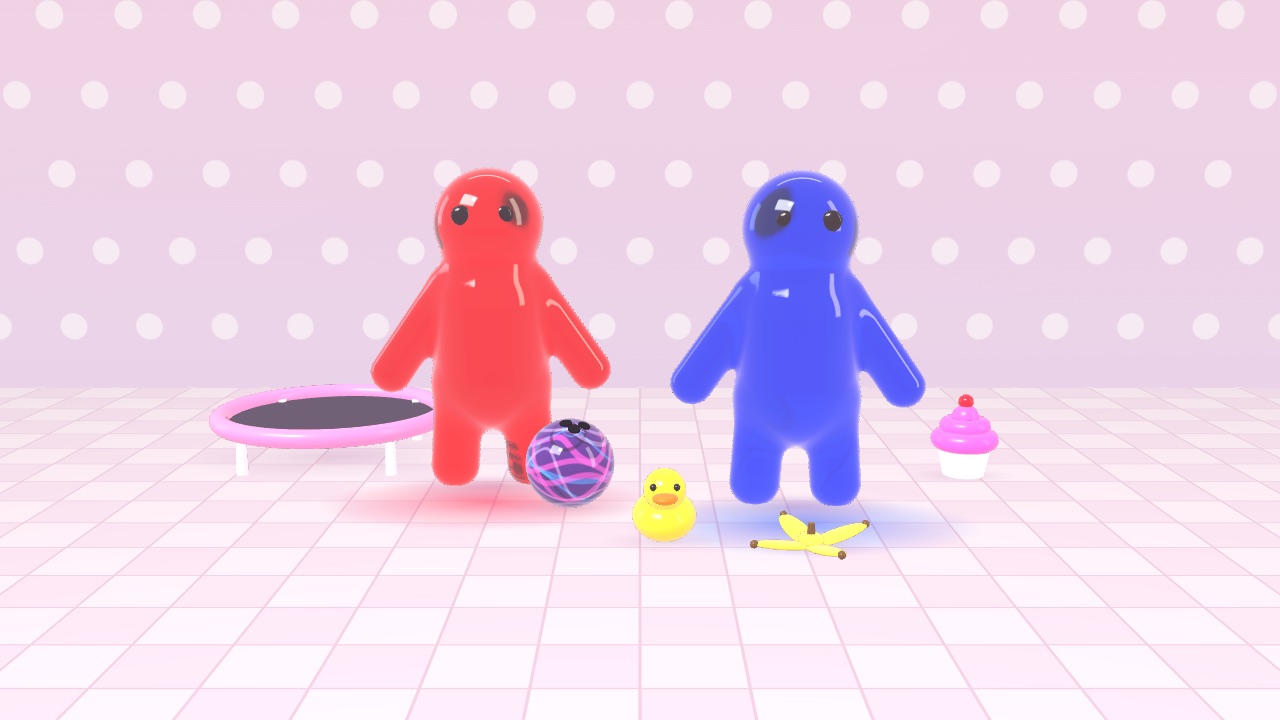
I built this with Claude Code. Two jello characters wander a room on their own, hug, play chase, bounce on a trampoline, eat cupcakes and bowl each other over. Three.js draws the jello in the browser, and every sound is made in code.
Tap a buddy to poke it, drag to stretch or throw it, and drag a color onto one to dye it. Add up to six buddies, press Dance for one of nine routines, and pick a room from the menu.
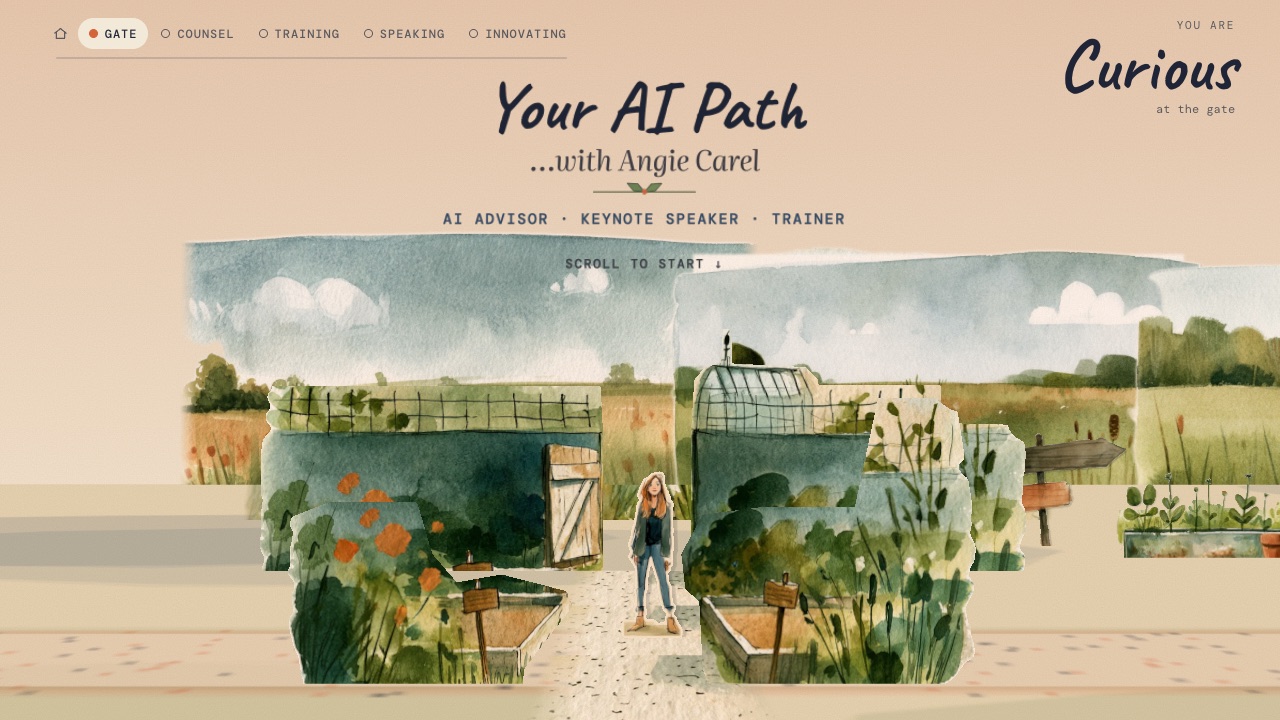
I built this with Claude Code as a paper-theater picture book about my work. Scroll along a watercolor garden path as people meet me for Counsel, Training and Speaking. The scenes and characters are my own Midjourney illustrations, cut out and layered in Three.js so they slide past each other as you scroll.
Scroll to walk the path. The buttons along the top jump to Counsel, Training, Speaking and the ending, and the story panel at the bottom says what each one is. At the end there's a link to schedule a chat and a field notebook of other things I've built.
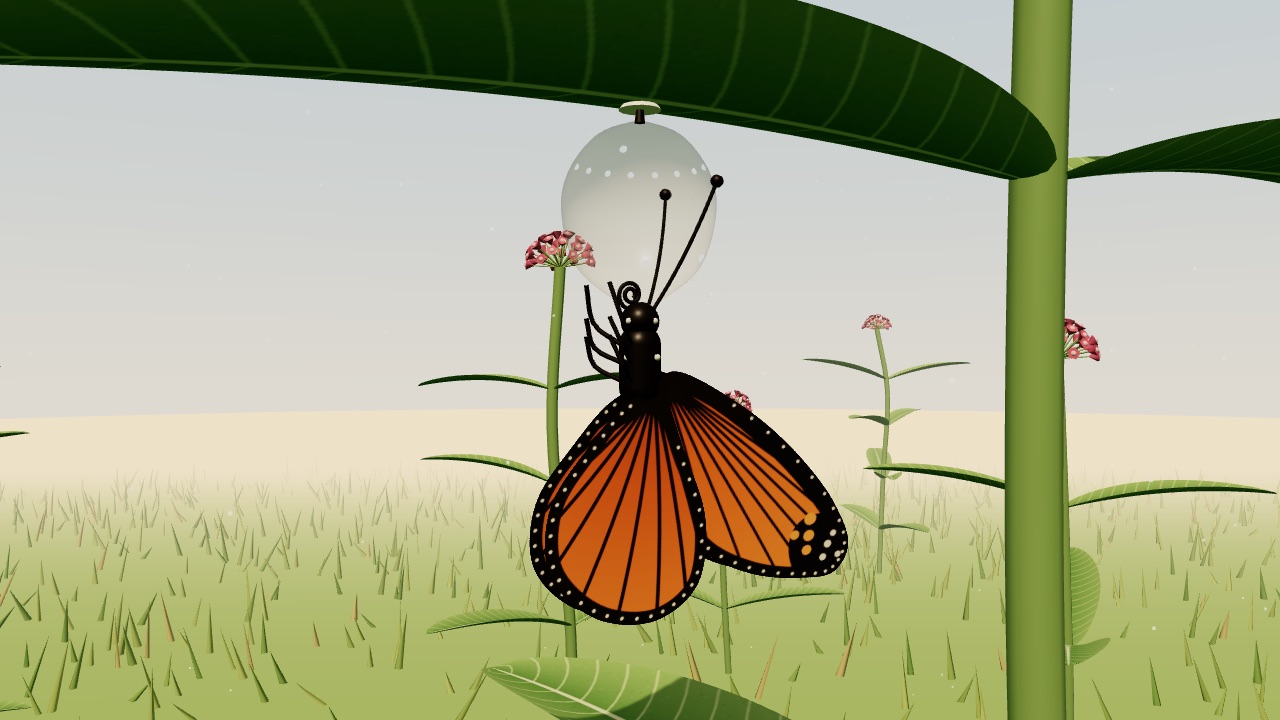
I built this picture book with Claude Code. Scroll through a monarch butterfly’s life, from egg to caterpillar to chrysalis to butterfly, acted out on one milkweed plant. Three.js draws the 3D scene in the browser, every plant and creature is made in code, and the narration is recorded with ElevenLabs.
Scroll to turn the pages. Each page’s scene plays as you scroll, and a day counter shows how long each stage takes. Turn on Read aloud to hear each page, or hide the book to watch the scene on its own.
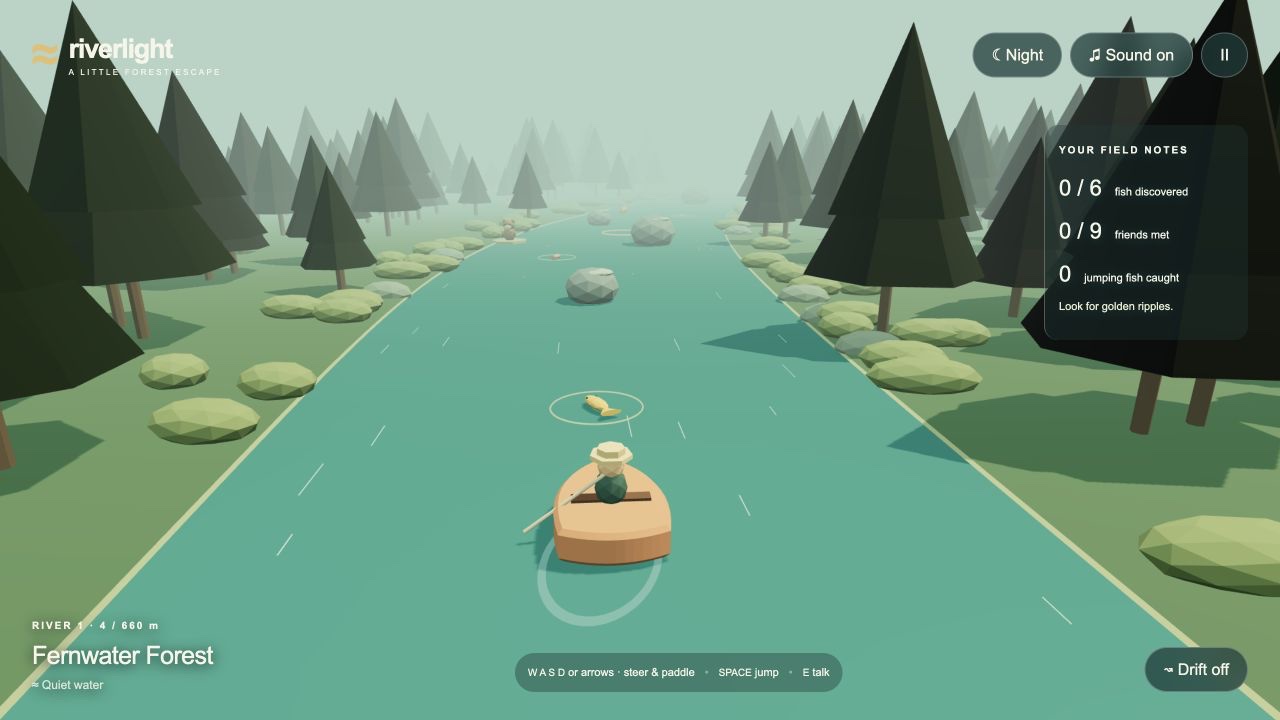
I built Riverlight in Codex with my 3D World Builder skill, starting with eight creative questions and refining the world through conversation. The skill used Three.js to draw the 3D world, JavaScript for gameplay, HTML and CSS for the interface, and the browser’s Web Audio API to create music and nature sounds. Vite packages the game, GitHub stores the code, and Vercel hosts it online.
Play Riverlight →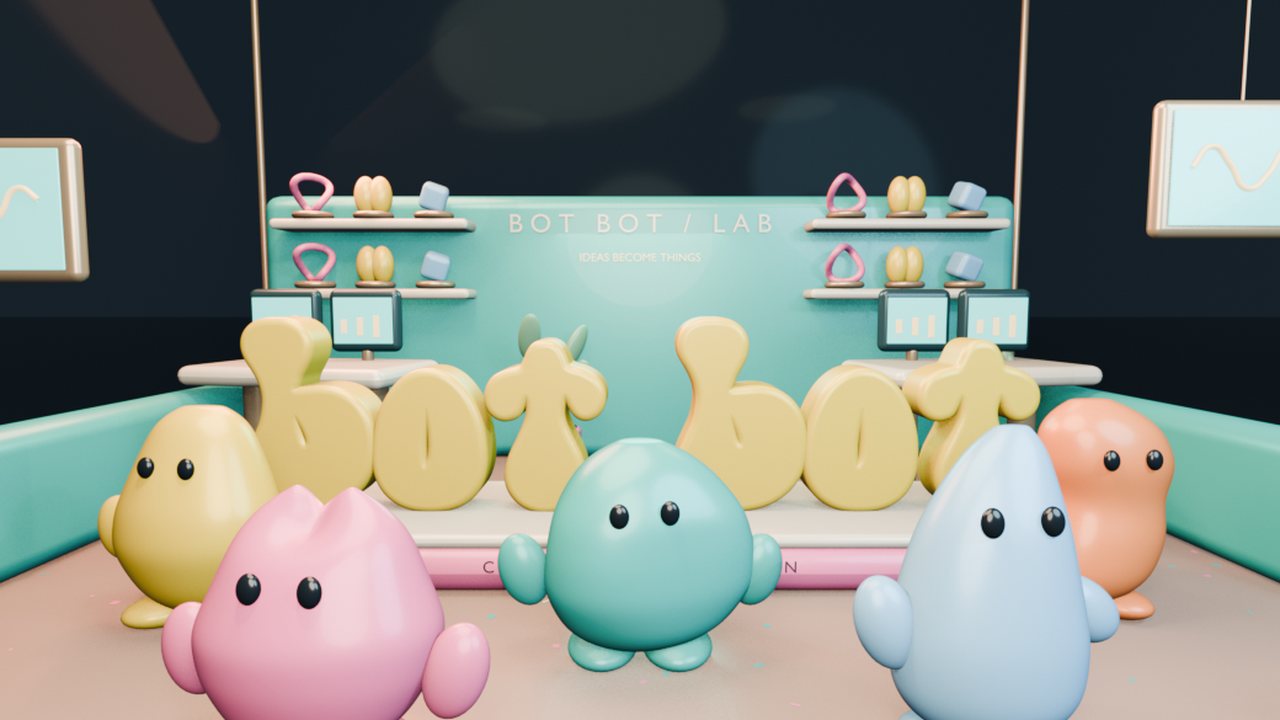
A project I’m working on with ChatGPT Astra. I started with flat 2D designs, used Astra to create a 3D scene in Blender, then asked it to turn that scene into an interactive landing page where you can explore the lab and meet the bots.
Drag to move around the room, scroll or pinch to zoom, and select a bot to see its personality. Replay the logo assembly, change the lighting, or step inside for a closer look. Includes keyboard controls and a reduced-motion option.
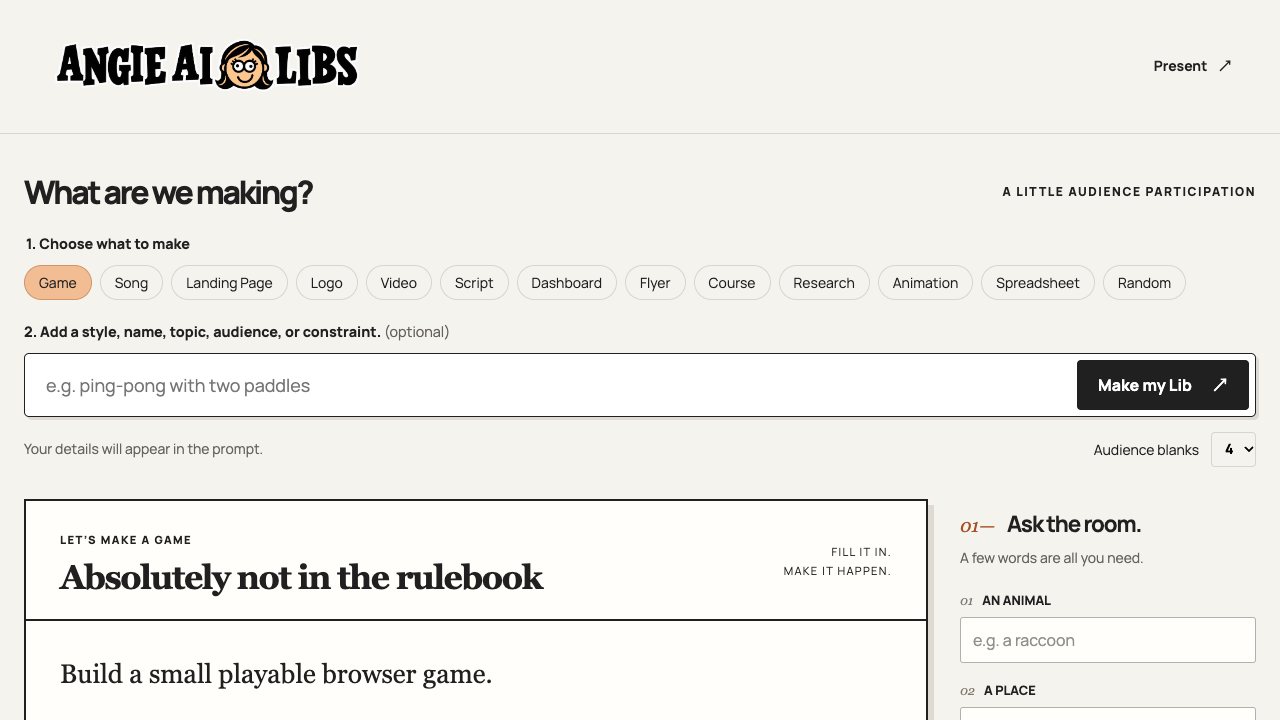
Turn a few audience ideas into a prompt for a game, logo, song, or video. Carry the same ideas into another format for a connected demo.
Choose an activity, fill in three to five blanks, and copy the prompt into your AI tool. Shuffle the setup, edit it, or turn it into another kind of creation. Prompts and answers stay in the current tab and are not saved by this tool.
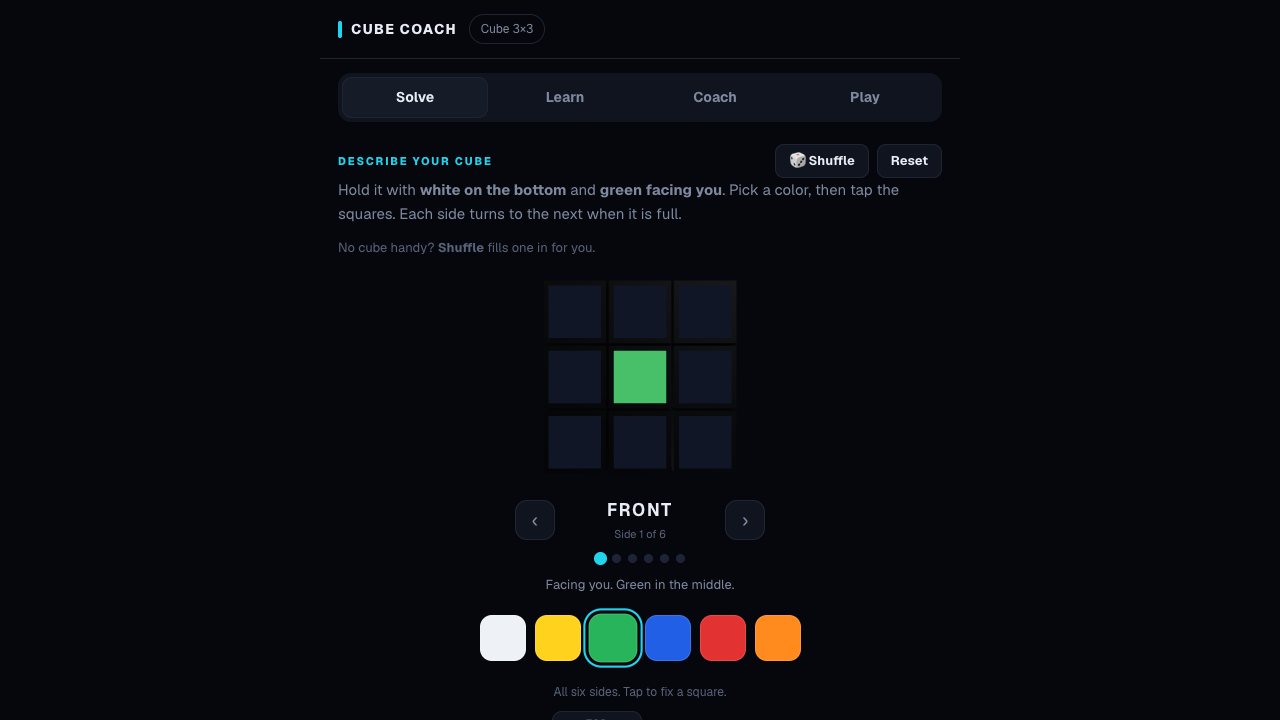
Teaches you to solve a real Rubik’s cube, one turn at a time, in seven stages you can practice on the screen.
Teaches you to solve a real 3×3 Rubik's cube, one turn at a time, in seven named stages. You can practice each stage and each algorithm on a cube you turn on the screen. It will also solve a cube you describe to it, in about twenty moves, and play the solution back so you can step and scrub through it. Built for a phone.
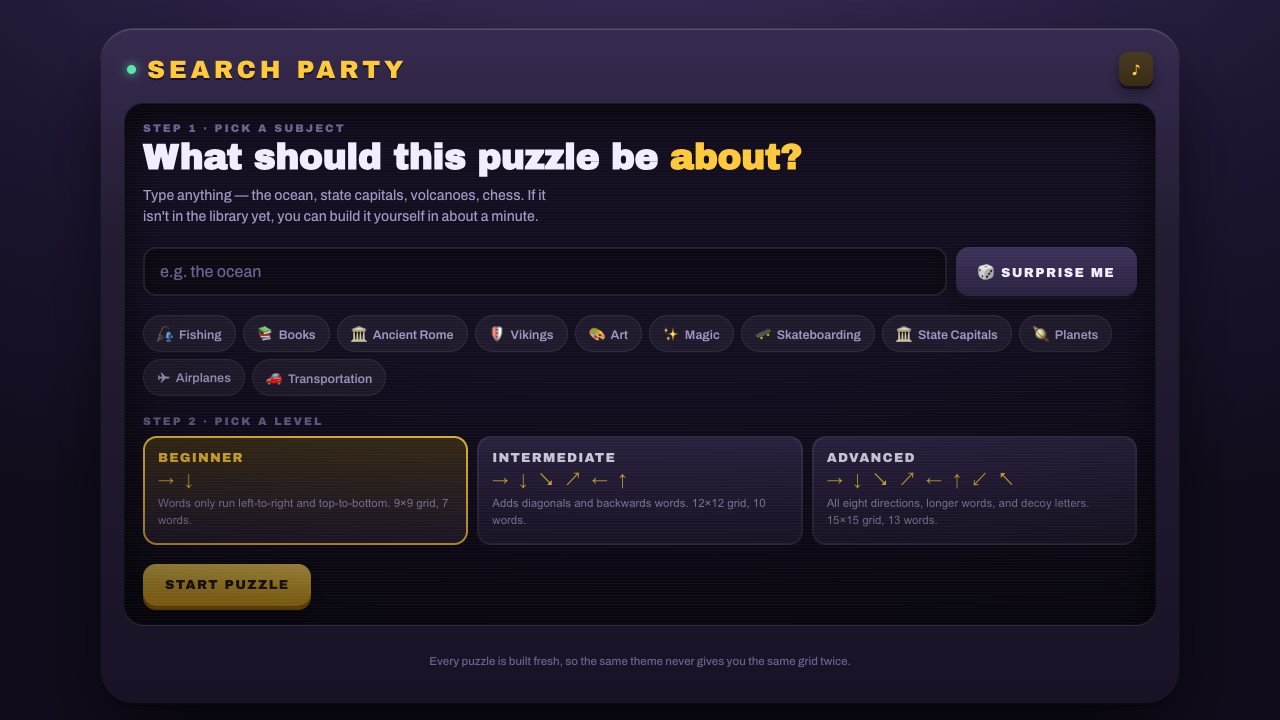
A word search that builds itself around any subject you type, at three levels of difficulty.
A word search that builds itself around any subject you type — the ocean, state capitals, anything — at three difficulty levels. Drag across letters with a mouse or a finger, or play it entirely with the arrow keys. Found words strike off in their own color, and it keeps a best time for each subject and level on your own device.
Turns the edge of your Mac’s screen into a warm light, so your face is lit on video calls without a ring light.
A menu-bar app that turns the edge of your screen into a warm light, so your face is lit on video calls without buying a ring light. It uses the display's HDR range to go genuinely brighter than white, and stays out of your screen shares. It works in reverse too, dimming the screen below its own lowest brightness for working at night. Written in Swift and Metal, built with Claude Code.
Stops your Mac dimming or going to sleep, on a timer or until you say otherwise.
A menu-bar app that stops your Mac dimming or sleeping, on a timer or indefinitely, with an option to let the screen go dark while your work keeps running. Written in Swift, built with Claude Code.
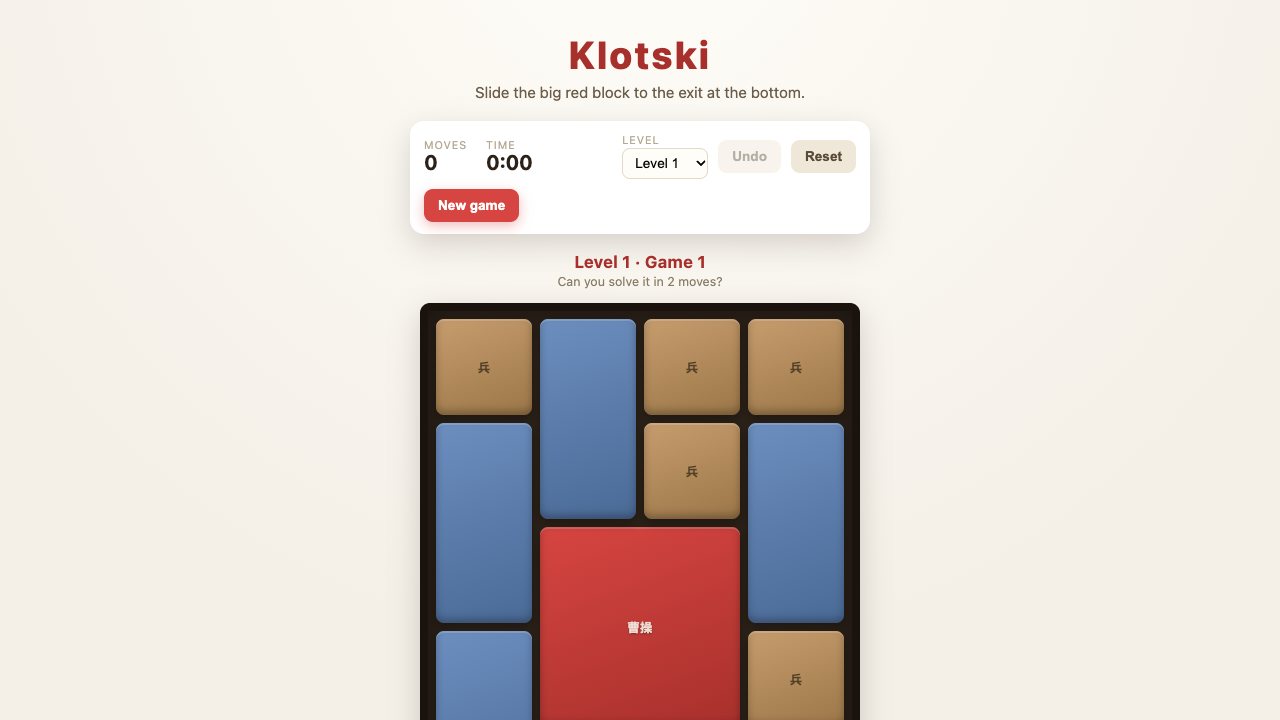
The classic sliding-block puzzle — work the big red block down to the gate at the bottom.
The classic sliding-block puzzle. Slide the big red block down to the gate at the bottom, moving the other pieces out of its way without ever lifting one off the board. Several starting layouts, a move counter, a timer and unlimited undo. The code is on <a href="https://github.com/angiecarel/Klotski" target="_blank" rel="noopener">GitHub</a>.
No experiments match these filters. Try another category or clear the filters.